November 4, 2026
How to Choose the Right Storage Boxes for Your Business Needs
By @storageboxesdaily
Finding the Right Fit for Commercial and Industrial Storage
Running a business in Singapore means dealing with tight margins and even tighter spaces. Whether you run a food processing facility, a logistics warehouse, or a retail operation, the way you store your goods affects everything from workflow to compliance. The right storage solutions can save floor space, reduce breakage, and keep your inventory organised. But with so many options on the market, knowing what to look for makes all the difference.
Many operators default to whatever is cheapest or closest at hand. That approach often leads to cracked containers, wasted time, and products that do not meet hygiene standards. The better path is to match the container to the task. That means understanding materials, dimensions, stackability, and the specific demands of your industry. In this article we walk through the key considerations when selecting storage boxes for commercial and industrial environments, with a focus on the kinds of plastic containers that dominate the sector.
Material Matters: Plastic Containers and Their Properties
Plastic containers are the workhorses of commercial storage. They are lightweight, durable, and available in formulations that suit different temperatures, chemicals, and food-contact requirements. The two most common types you will encounter are polypropylene boxes and HDPE containers.
Polypropylene boxes are popular for general storage because they resist moisture, stains, and most chemicals. They handle temperatures up to around 120 degrees Celsius, which makes them suitable for hot-fill products or environments near ovens and steam lines. Their rigidity also helps them hold their shape under weight, so stacking is more stable.
HDPE containers, on the other hand, are tougher and more impact-resistant. They are often used for heavy-duty boxes that need to survive drops, bumps, and rough handling in warehouses. HDPE is also food-safe, which is why you find it in food-grade containers for ingredients and finished products. Its resistance to cracking at low temperatures makes it a good choice for cold storage as well.
There are also clear plastic boxes for situations where visibility matters. If your team needs to identify contents without opening every lid, a translucent or transparent box saves time. The trade-off is that clear materials can become scratched over time and may not be as strong as opaque alternatives. For many operations, a mix of clear and solid colours works best.
Stacking and Nesting: Maximising Your Storage Footprint
Floor space in Singapore comes at a premium. Every square metre counts. That is why stackable bins and nesting containers are so valuable in commercial storage. Stackable bins allow you to build vertical storage without shelving, which is ideal for walk-in coolers or temporary holding areas. They are designed with interlocking rims and reinforced corners so the column stays stable even when you pull a box from the middle of the stack.
Nesting containers are the opposite: they taper so that one fits inside another when empty. This reduces the storage footprint of the containers themselves when they are not in use. For seasonal businesses or facilities that handle variable volumes, nesting containers are a practical way to keep spare capacity without sacrificing floor area. The downside is that nesting containers often have thinner walls and lower weight capacity, so they are best for lighter loads.
When evaluating bulk storage options, consider how the boxes interact with your existing racking and pallets. Some containers are designed with fork-lift pockets or runner bars so they can be moved easily with mechanical handling equipment. Others are purely hand-carried. Knowing which you need will save you from buying boxes that do not fit your workflow.
Food-Grade Containers: What to Look For
If your business handles anything that will be eaten, you need food-grade containers. That term is not just a marketing label. It means the plastic has been formulated without harmful additives, and it meets regulatory standards for contact with food. In Singapore, the Singapore Food Agency sets the guidelines, but many suppliers align with international standards such as FDA or EU regulations as well.
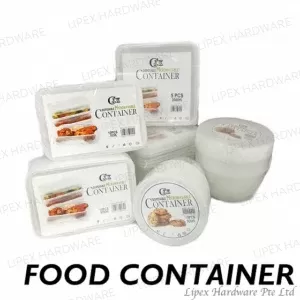
Food-grade containers must be easy to clean and resistant to staining and odour absorption. Smooth surfaces without crevices or sharp corners help with sanitation. Many food packaging professionals prefer containers with tight-fitting container lids to prevent leaks and contamination. A sealed container keeps moisture out, pests away, and flavours locked in. It also helps with shelf-life extension for dry goods and semi-perishables.
One thing to watch is the material's reaction to acidic or oily foods. Some plastics can absorb fats or discolour when used with tomato-based products or citrus. HDPE and polypropylene generally handle these well, but it pays to confirm with your supplier. A reputable Singapore supplier will be able to provide material data sheets and explain the limitations of each grade.
Heavy-Duty Boxes for Industrial Storage
Industrial storage often involves heavier loads, harsher environments, and more frequent handling. Think of a factory floor where boxes sit near machinery, get bumped by forklifts, or are stacked five or six high. In those conditions, you need heavy-duty boxes that can take the punishment.
These boxes are typically made from thicker-gauge HDPE or reinforced polypropylene. They often have ribbed sides or metal-reinforced rims for extra strength. Some models are designed with a lid that clips on securely so the box remains sealed even if it tips over. That is important for storing powders, granules, or small parts that could spill and create a mess or a safety hazard.
Another feature common in industrial storage is a textured base or anti-slip surface. This prevents the box from sliding on smooth floors or on the bed of a truck. If you are moving inventory between locations, you will appreciate boxes that stay put during transport. Also consider whether you need a lid that is lockable. Some warehouse bins come with padlock hasps or integrated locking mechanisms for security of high-value items.
Modular Storage and Organisation
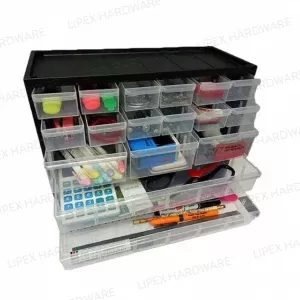
Not every storage problem requires a single giant bin. Many operations benefit from modular storage systems where smaller boxes sit inside a larger frame or on a trolley. These systems allow you to group items by category, pick list, or production line. They are common in pick-and-pack operations, parts rooms, and assembly areas.
Modular storage often uses standard-sized containers that fit into a shelving system or a rack. That way you can reconfigure your layout without replacing all your boxes. The containers themselves are usually made from polypropylene and come in multiple depths and heights. You can mix clear plastic boxes for fast-moving items with opaque ones for bulk stock. Some modular systems include dividers or compartment inserts for sorting small hardware or components.
The main advantage is flexibility. When your product mix changes or you reorganise the floor, you simply move the boxes. The containers themselves are durable enough to last through several layout changes. And because they are standard sizes, you can buy more later without worrying about compatibility.
Choosing a Supplier
Even the best box is useless if you cannot get it when you need it or if the quality is inconsistent. A good supplier offers consistent product quality, reliable stock levels, and practical advice. For businesses in Singapore, working with a local supplier means shorter lead times, easier returns, and access to products that are suited to the local climate and regulations. A Singapore supplier like lipex.com.sg can advise on which storage boxes best match your application, whether you need stackable bins for a cold room or food-grade containers for a kitchen.
Look for suppliers that carry a range of materials and sizes. That way you can consolidate your orders and simplify inventory. Also check whether they sell container lids separately or as part of a set. Lids that do not fit properly are a common frustration, especially when mixing brands. Stick with one supplier for your main line of containers to avoid compatibility problems.
Finally, think about your long-term needs. The cheapest box today may not be the best value if it cracks after a year. The investment in quality storage boxes pays off in fewer replacements, less product damage, and a cleaner, more efficient workspace. Take the time to match the container to the task, and you will save money and headaches down the line.
Whether you are outfitting a new facility or upgrading an existing one, the fundamentals are the same: understand your material, your load, and your environment. From there, the right choice becomes clear.
❧